The October Blues: Why Teachers Feel Exhausted Mid-Semester and What Schools Can Do
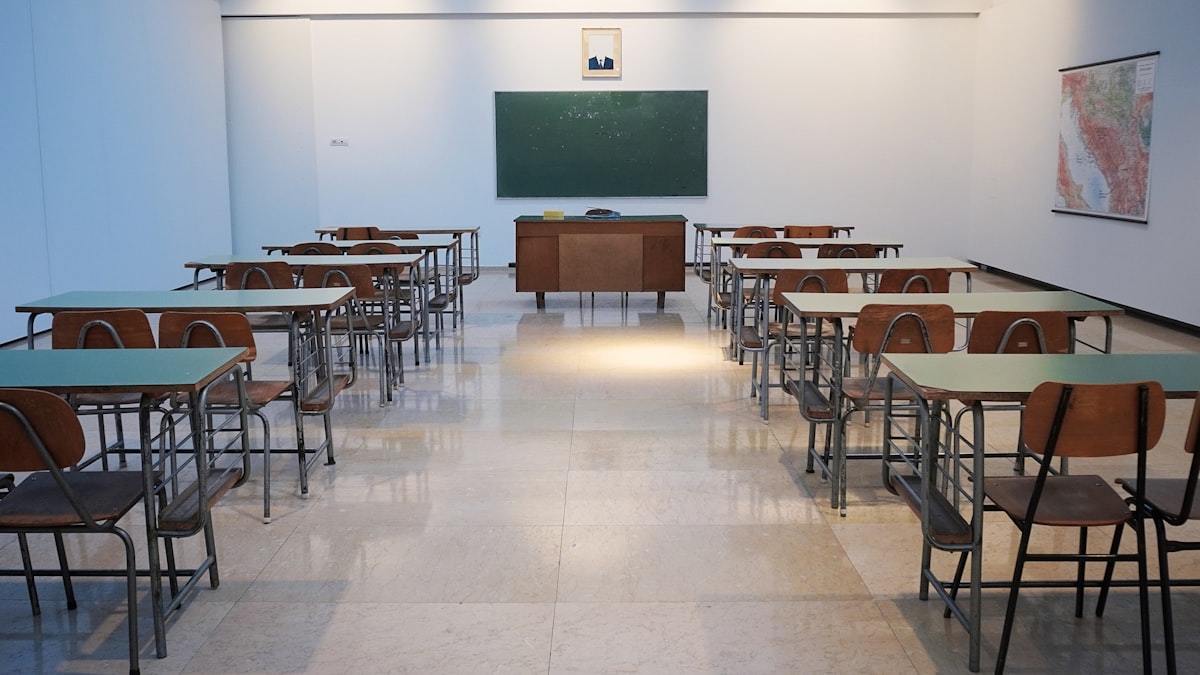
Some educators call this experience the "October Blues"—an informal term for the emotional and professional slump that may follow the opening weeks of a school year. The label captures a recognizable experience, but it should not be mistaken for a clinical diagnosis or proof that October is universally the most difficult month for teachers.
Understanding this mid-semester slowdown requires more than advice to rest, stay positive, or practice self-care. Teachers need practical ways to manage recurring demands, while school leaders must examine whether workloads, schedules, and institutional expectations make sustainable teaching possible.
What Are the October Blues?
The term describes a possible drop in energy, enthusiasm, or confidence after the initial excitement of the academic year. It is discussed in education commentary, including an EdSurge feature on the October Blues, which explores educator Mike Anderson's perspective on the experience and ways teachers and administrators can respond.
However, the term is informal. It does not establish that all teachers experience a predictable October slump, nor does it demonstrate that the same seasonal pattern occurs across countries, school calendars, or educational systems.
A more useful approach is to treat the October Blues as a prompt for reflection: What has changed since the school year began? Which responsibilities are consuming the most time? Are classroom routines working? Is the current workload manageable?
October Blues and Teacher Burnout Are Not the Same Thing
Temporary fatigue and occupational burnout should not be used interchangeably. A difficult week may improve after adequate rest, a manageable workload, or resolution of a specific classroom problem. Persistent exhaustion and growing detachment from work may indicate a more serious pattern that deserves attention.
The World Health Organization (WHO) describes burnout in the International Classification of Diseases as an occupational phenomenon resulting from chronic workplace stress that has not been successfully managed. Its defining dimensions are energy depletion or exhaustion, increased mental distance or cynicism toward one's job, and reduced professional efficacy.
WHO does not classify burnout as a medical condition in ICD-11. The distinction matters because an informal seasonal slump should not automatically be labeled burnout, while persistent work-related distress should not be dismissed as a normal part of teaching.
Teachers experiencing ongoing or severe distress should consider seeking appropriate professional support through available healthcare, counseling, employee assistance, or other trusted services. School leaders should also investigate workplace factors rather than treating every difficulty as an individual failure.
Why the Pressure Can Build After the School Year Begins
1. Initial enthusiasm meets the reality of daily work
The opening weeks may involve fresh materials, new relationships, and a sense of possibility. As regular teaching settles in, preparation and assessment become recurring obligations. Teachers must respond to students' different learning needs while keeping lessons moving and maintaining a supportive classroom environment.
This transition is a plausible explanation for a mid-semester slowdown, but it should be understood as an editorial interpretation rather than a universal, scientifically established October effect.
2. Small tasks create a substantial workload
Teaching involves much more than the hours spent in front of a class. Reviewing assignments, adapting lesson materials, responding to messages, recording progress, attending meetings, and completing administrative requirements can fragment the working day.
When these tasks repeatedly extend into evenings and weekends, opportunities for recovery shrink. The problem may not be one unusually difficult assignment, but the cumulative effect of obligations that individually appear manageable.
3. Classroom needs become more visible
As teachers collect assignments, observe participation, and assess student progress, they may discover that some learners need more support than expected. Teachers then face decisions about differentiation, feedback, intervention, and how to allocate limited instructional time.
These challenges can be professionally demanding, but they are also useful information. A mid-semester review can help teachers identify which classroom routines need adjustment and which students require additional support from the wider school team.
4. New teachers may need additional support
Experienced educators may already have established lesson materials, classroom procedures, and strategies for managing recurring tasks. Early-career teachers may still be developing those systems while learning school policies and building relationships with students and families.
This is a reason to provide structured mentoring, protected planning time, and opportunities to observe experienced colleagues. It is not a reason to assume that every new teacher will struggle or that experienced teachers are immune to excessive workload.
What the Research Says About Teacher Stress
Evidence about teacher well-being supports taking workplace stress seriously, although it does not establish that October itself causes a universal decline in morale.
In its 2024 State of the American Teacher research, RAND reported that teachers in its U.S. survey experienced frequent job-related stress and burnout at higher rates than comparable working adults. The survey covered approximately 1,500 public K–12 teachers.
RAND's findings provide evidence of a broader occupational challenge in the United States. They should not be interpreted as a measurement of the October Blues, and they cannot automatically be generalized to teachers in other countries.
The WHO's definition of burnout also reinforces an important principle: the management of chronic workplace stress cannot be reduced to personal motivation alone.
Taken together, these sources support a measured conclusion. Educator well-being deserves attention, and working conditions matter. But claims about a specific month, a predictable emotional cycle, or a particular intervention should be supported by evidence that directly examines that question.
Four Practical Ways Teachers Can Reset Mid-Semester
1. Audit the workload before adding new strategies
Before introducing another productivity system, spend one working week recording the time spent on lesson planning, assessment, meetings, student support, parent communication, and administrative work. Include work completed outside contracted hours.
Review the results to identify tasks that are taking longer than expected, activities that could be simplified, and responsibilities that need clarification. The aim is not to make every minute more productive; it is to understand where time is going and which demands can reasonably change.
2. Simplify one recurring classroom process
Choose one routine that creates unnecessary friction. It might be collecting assignments, communicating deadlines, distributing materials, or providing feedback on a recurring type of task.
- Use a consistent process for submitting and tracking work.
- Provide clear success criteria before students begin an assignment.
- Use focused feedback on the most important learning objectives.
- Where appropriate, teach students to check their own work against a rubric before submitting it.
These changes should preserve instructional quality. Reducing workload by removing feedback students need or overlooking learning difficulties would shift the cost onto learners rather than solve the underlying problem.
3. Protect recovery time with realistic boundaries
Set a practical stopping point for routine work when circumstances permit. Identify which tasks genuinely require same-day attention and which can wait until the next planned work period. Consider preparing reusable materials or setting aside a specific block for marking rather than allowing grading to occupy every evening.
Boundaries are easier to maintain when school policies, workload, and staffing make them realistic. A teacher cannot individually resolve a schedule that consistently requires more work than available time allows.
4. Reconnect with colleagues and professional purpose
A short conversation with a trusted colleague can help identify workable classroom strategies and reveal that a difficult situation is not unique. Shared planning can also reduce duplicated effort when teachers have similar curriculum responsibilities.
It can help to record specific signs of progress, such as a student gaining confidence, an improved classroom routine, or a lesson that helped learners understand a difficult concept. These examples do not eliminate structural problems, but they can provide a more balanced view of the work.
What School Leaders Should Change
Individual strategies are useful, but they are not a substitute for reasonable working conditions. If staff members repeatedly work late, struggle to complete essential tasks, or report that their workload is unmanageable, administrators should investigate the underlying causes.
Review administrative demands
Audit reports, meetings, data-entry requirements, and documentation processes. Identify duplicated information, low-value reporting, and tasks that can be consolidated without compromising student safety, accountability, or educational quality.
Protect planning and collaboration time
Ensure teachers have usable time to prepare lessons, review student work, and coordinate support. Collaboration is most helpful when it replaces duplicated effort or solves a shared problem, not when it becomes another meeting added to an already full schedule.
Provide targeted support for early-career teachers
Offer mentoring, practical classroom-management support, access to established teaching resources, and regular opportunities to discuss challenges. Early-career support should be built into working arrangements rather than left entirely to informal goodwill.
Make staff feedback actionable
Short, confidential staff check-ins can help leaders identify recurring workload issues. Asking for feedback is meaningful only when staff can see how the information informs decisions. Schools should communicate which changes will be made, which cannot be made, and why.
Evaluate whether interventions work
Schools can track indicators such as work completed outside contracted hours, access to planning time, staff perceptions of workload, absence patterns, and retention trends. Results should be interpreted carefully and in context, not used to penalize individual teachers or reduce complex experiences to a single score.
A Two-Week Mid-Semester Reset Plan
Rather than attempting to change every aspect of teaching at once, teachers and school leaders can use a short review period to identify one manageable improvement and evaluate its effect.
| Period | Action | Evidence to review |
|---|---|---|
| Days 1–3 | Record recurring tasks, time demands, and the main sources of classroom friction. | A short workload and routine inventory. |
| Days 4–5 | Choose one routine to simplify and discuss any workload barriers with a colleague or administrator. | A specific change with a clear purpose. |
| Week 2 | Test the change while maintaining essential learning and safeguarding requirements. | Time spent, quality of work, and student response. |
| End of week 2 | Review the result and decide whether to keep, adapt, or discontinue the change. | A documented decision based on practical evidence. |
This plan is a practical editorial recommendation, not a clinically validated intervention. Its purpose is to make one manageable workplace improvement visible and testable. Persistent distress or serious workload problems may require broader organizational changes and professional support.
When a Mid-Semester Slump Needs More Attention
A temporary drop in enthusiasm does not necessarily indicate burnout. However, persistent exhaustion, growing cynicism about work, reduced professional effectiveness, or difficulty recovering between working days should not simply be dismissed as an expected seasonal experience.
Teachers who are struggling should consider speaking with a healthcare professional, counselor, trusted supervisor, or appropriate employee support service. School leaders should respond constructively and review whether workload, staffing, classroom demands, or institutional practices are contributing to the situation.
Support should be accessible without stigma. It should also respect confidentiality and avoid assuming that every educator experiencing fatigue has the same needs or requires the same response.
Conclusion: Treat October as a Checkpoint, Not a Diagnosis
The October Blues offer a useful way to start a conversation about the pressures educators may experience after the initial weeks of a school year. But the calendar alone does not explain teacher exhaustion, and a seasonal label cannot replace evidence about individual circumstances and working conditions.
Teachers can benefit from reviewing recurring tasks, simplifying classroom routines, protecting realistic recovery time, and collaborating with colleagues. School leaders have an equally important responsibility to examine administrative burdens, protect planning time, and provide meaningful support.
The goal should not be to persuade educators to endure an unsustainable workload with greater resilience. It should be to create working conditions in which effective teaching and educator well-being can reinforce one another throughout the academic year.
References and Further Reading
- Apfel, I. (2026). "The 'October Blues' Are Coming. Here's How Teachers Can Beat Them." EdSurge. Read the original EdSurge feature .
- World Health Organization. "Burn-out an Occupational Phenomenon." International Classification of Diseases (ICD-11). Read the WHO explanation .
- RAND. (2024). State of the American Teacher and the American Principal. Research on U.S. educator working conditions and well-being. Explore the research and reports .
Editorial note: "October Blues" is used here as an informal description of a possible mid-semester slump, not as a clinical diagnosis. Research on teacher stress and burnout provides broader context, but it does not establish that October universally causes a decline in teacher well-being. The practical recommendations in this article are editorial guidance and should be adapted to local school conditions.
Source: EdSurge