How Modern Electronic Devices Work: The Science Behind Chips, Wireless Networks, and AI Hardware
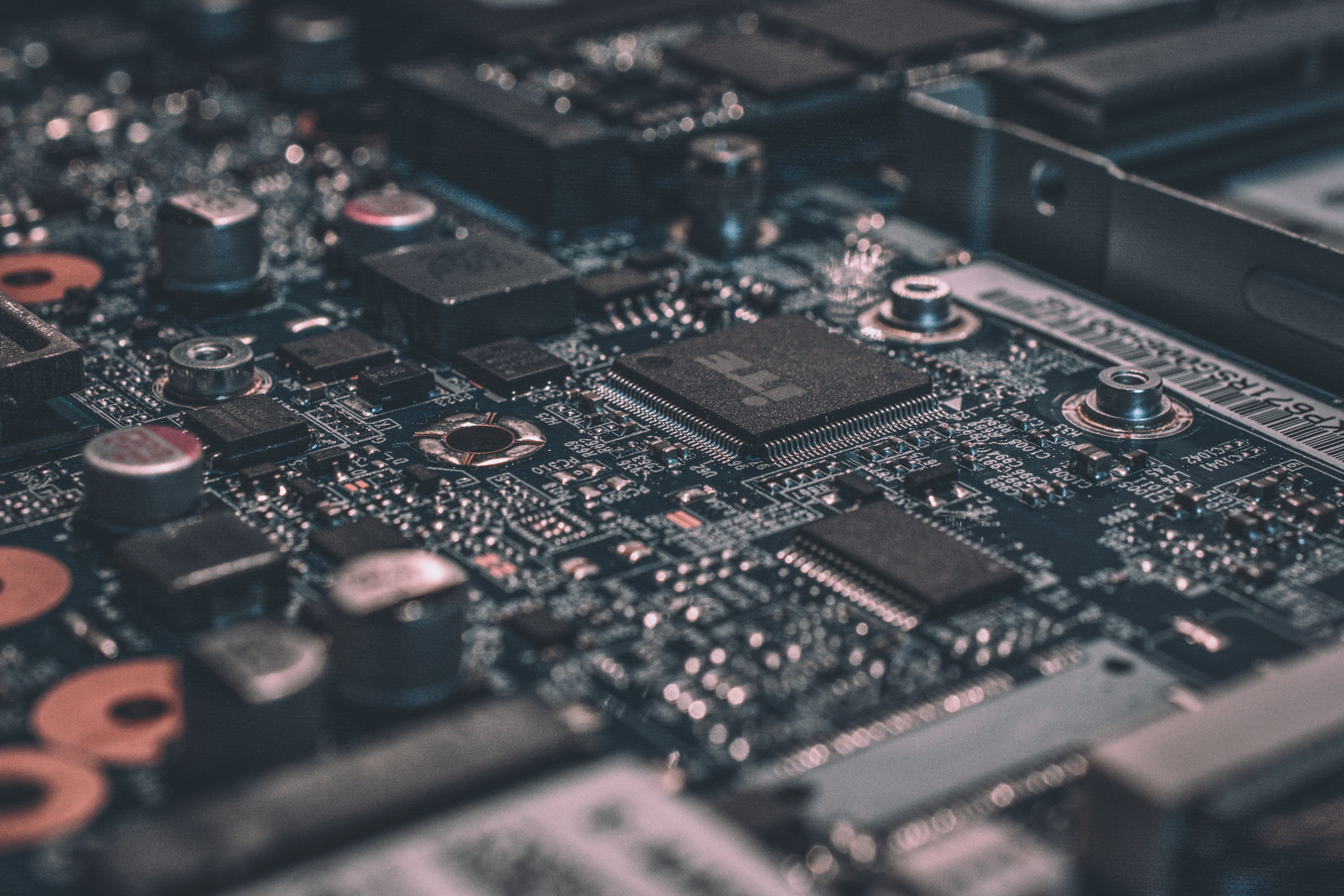
Modern electronics is not the product of a single invention. It is the result of advances in semiconductor physics, materials science, circuit design, manufacturing, software, and communication engineering. Understanding how these fields fit together explains both the remarkable capabilities of today's devices and their practical limitations.
This article follows the path from the transistor to the complete electronic system, then examines why power consumption, wireless interference, heat, and manufacturing complexity remain important engineering problems.
1. From the Transistor to the Integrated Circuit
A major turning point in electronics came in December 1947, when John Bardeen and Walter Brattain demonstrated a working point-contact transistor at Bell Laboratories. William Shockley subsequently contributed to the development of the junction transistor. These advances helped establish solid-state devices as alternatives to the larger vacuum tubes used in earlier electronic equipment.
Transistors can control electrical signals without relying on the heated cathodes required by conventional vacuum tubes. Their small size, switching capability, and suitability for manufacturing in large quantities helped make compact electronic systems practical.
The next major step was the integrated circuit. Jack Kilby demonstrated an early working integrated circuit in 1958. Robert Noyce later developed a practical monolithic approach that used planar semiconductor manufacturing and metal interconnections. Their contributions helped establish the foundation of the modern microchip.
An integrated circuit combines many circuit elements on a semiconductor substrate. Rather than assembling every transistor as a separate component, manufacturers can fabricate large numbers of interconnected devices on a single silicon wafer. This improves integration density and can reduce the size, cost, and energy required per electronic function.
Historical sources: Computer History Museum: Invention of the Point-Contact Transistor and Computer History Museum: Practical Monolithic Integrated Circuit .
2. How Semiconductors Control Electricity
Electronic circuits need materials whose electrical behavior can be controlled. Metals generally conduct electricity readily, while insulating materials strongly resist ordinary current flow. Semiconductors occupy an intermediate position, and their properties can be adjusted through material composition, electric fields, temperature, and manufacturing processes.
Silicon is widely used because its semiconductor properties can be controlled and it can be processed into highly integrated structures. In a semiconductor crystal, electrons occupy permitted energy states. The availability of mobile electrons and positively behaving electron vacancies, known as holes, affects how current flows.
Doping and charge carriers
Manufacturers use a process called doping to introduce carefully controlled impurity atoms into semiconductor material. This changes the concentration of charge carriers.
- N-type material: Donor dopants, such as phosphorus in silicon, increase the availability of electrons as mobile charge carriers.
- P-type material: Acceptor dopants, such as boron in silicon, create conditions in which holes act as positive charge carriers.
When p-type and n-type regions meet, the interface can form a p-n junction. A depletion region develops around the junction, creating an internal electric field. Applying an external voltage changes the junction's behavior and can make current flow much more readily in one direction than the other.
This principle is important in diodes and in the junctions found within many semiconductor devices. It is not, however, a complete description of every transistor. Modern metal-oxide-semiconductor field-effect transistors (MOSFETs), including FinFET designs, primarily control a channel using an electric field generated by a gate.
3. Transistors: The Switches Inside Digital Devices
A transistor can control current in response to an electrical signal. In digital circuits, transistors are commonly arranged to represent and manipulate binary states. Logic gates combine these states into operations such as AND, OR, and NOT, while more complex circuits implement arithmetic, memory access, and program execution.
A modern processor contains many interconnected transistors, but a processor is not simply a collection of independent switches. Its performance depends on circuit architecture, transistor characteristics, memory systems, clock timing, manufacturing quality, and the software workload being executed.
As transistors become smaller, engineers must manage leakage current, manufacturing variation, heat density, and the difficulty of controlling electrical behavior at very small dimensions. Continued progress therefore depends on both improvements in transistor structures and advances in materials, packaging, and circuit architecture.
Key insight: More transistors do not automatically make every device faster. Performance depends on how those transistors are organized, how quickly data reaches them, and how much heat and power the complete system can tolerate.
4. The Components That Make a Circuit Work
Electronic systems combine passive components, active semiconductor devices, and programmable integrated circuits. Each performs a different role, and a functioning device depends on their interaction.
| Component | Basic Function | Common Applications |
|---|---|---|
| Resistor | Opposes current flow and dissipates electrical energy as heat. | Current limiting, voltage dividers, and signal biasing. |
| Capacitor | Stores energy in an electric field. | Power-supply decoupling, filtering, and temporary energy storage. |
| Inductor | Stores energy in a magnetic field created by current. | Switching converters, filters, and radio-frequency circuits. |
| Diode | Controls current according to its electrical characteristics. | Rectification, signal detection, and circuit protection. |
| Transistor | Controls current or voltage and can operate as a switch or amplifier. | Logic gates, processors, memory circuits, and signal amplification. |
| Microcontroller | Combines a processor, memory, and peripheral interfaces in one chip. | Appliances, sensors, industrial controllers, and embedded systems. |
Component selection involves trade-offs. A capacitor suitable for filtering high-frequency noise may not provide the energy storage needed by a power supply. An inductor designed for a switching converter must handle the expected current without excessive losses. Engineers select components based on electrical ratings, operating conditions, physical size, reliability, and cost.
5. How Wireless Electronics Transmit Information
Wireless devices exchange information by encoding data into electromagnetic waves. A transmitter generates a radio-frequency signal, modifies it according to the information being sent, and radiates it through an antenna. A receiver detects the incoming signal and processes it to recover the transmitted data.
The quality of a wireless connection depends on more than the strength of the signal. Distance, obstacles, antenna design, interference, channel congestion, receiver sensitivity, and the amount of data being transmitted all influence performance.
Modulation converts data into signals
Modulation changes a property of a carrier wave to represent information. Different methods are suited to different applications.
- Amplitude modulation (AM): Encodes information by varying a carrier's amplitude. It remains associated with traditional radio broadcasting.
- Frequency modulation (FM): Encodes information through changes in instantaneous carrier frequency. FM broadcasting is valued for its resistance to certain types of amplitude noise.
- Phase shift keying (PSK): Represents digital symbols through changes in carrier phase.
- Quadrature amplitude modulation (QAM): Uses combinations of amplitude and phase to encode symbols. Higher-order schemes can carry more bits per symbol, but generally require better signal quality to maintain reliability.
Wi-Fi and cellular systems use sophisticated digital modulation, coding, and resource-allocation techniques. Bluetooth also uses frequency-hopping techniques to reduce the likelihood of persistent interference in the 2.4 GHz band.
References: Bluetooth SIG: How Adaptive Frequency Hopping Helps Manage Interference .
A useful practical lesson is that a device can support a modern wireless standard and still deliver poor results in a crowded environment. Real-world performance depends on the entire radio system and the conditions in which it operates.
6. Power Consumption, Battery Life, and Heat
Portable electronics must balance performance against battery capacity and heat dissipation. Even when a processor performs calculations efficiently, power is consumed by memory access, radio transmission, display operation, voltage conversion, and other subsystems.
In CMOS digital logic, dynamic power consumption is commonly approximated using the relationship below:
In this expression, α represents switching activity, C is the effective switched capacitance, V is supply voltage, and f is switching frequency. The relationship is an approximation for dynamic power, not a complete model of total device consumption.
Because voltage appears squared in this approximation, reducing supply voltage can significantly reduce dynamic power, provided the circuit can still operate reliably. Reducing clock frequency also generally reduces dynamic power, although it may increase the time needed to complete a task.
Dynamic voltage and frequency scaling (DVFS) allows supported processors to adjust operating voltage and clock frequency according to workload and thermal conditions. Devices also use sleep states, clock gating, power gating, and workload scheduling to avoid unnecessary energy consumption.
Total power also includes leakage and losses in components such as voltage regulators. Power eventually becomes heat, which must be transferred away from components to prevent performance throttling, instability, or damage.
IEEE provides a technical overview of these concepts in its discussion of power dissipation in electronic systems .
7. AI Accelerators and Specialized Computing Hardware
Artificial intelligence workloads often involve large numbers of mathematical operations, particularly matrix multiplication and vector operations. General-purpose CPUs can perform these calculations, but specialized hardware may execute some workloads more efficiently.
Graphics processing units (GPUs) were developed to handle highly parallel graphics workloads and are also widely used for AI computation. Neural processing units (NPUs) and other AI accelerators are designed to accelerate selected machine learning operations, often with attention to energy efficiency and on-device inference.
These accelerators do not necessarily imitate the biological operation of neurons or synapses. In many products, their advantage comes from specialized arithmetic units, parallel execution, optimized memory movement, and support for lower- precision numerical formats where appropriate.
Running some AI workloads locally can reduce dependence on cloud connectivity and may improve response time or privacy. However, local execution still consumes energy and memory, and not every model fits within a device's available resources. Developers must balance model size, accuracy, latency, and power consumption.
8. Quantum Computing: Real Potential, Not Universal Speed
Quantum computers process information using quantum bits, or qubits. Unlike classical bits, qubits can occupy quantum superpositions, and multiple qubits can become entangled. Carefully designed quantum algorithms can use these properties to solve certain problems differently from classical computers.
This does not mean a quantum computer is automatically faster for every task. A quantum advantage depends on the problem, the algorithm, the hardware, and the resources required to obtain a useful answer. The popular claim that quantum machines simply try every possible answer simultaneously and return the correct one is misleading.
Current quantum hardware faces substantial engineering challenges. Qubits can be disturbed by environmental noise, operations can introduce errors, and useful large-scale computation may require extensive error correction. Building reliable systems is therefore as important as increasing the number of qubits.
The National Institute of Standards and Technology explains these principles and limitations in its guide to quantum computing .
For most consumer electronics, conventional semiconductor processors remain the practical foundation. Quantum computing is a developing field with potential advantages for selected scientific and mathematical tasks, not a direct replacement for every CPU or GPU.
9. The Hidden Engineering Behind Device Reliability
A finished electronic product must work outside a controlled laboratory. It must tolerate expected temperatures, vibration, electrical transients, component variation, electromagnetic interference, and years of use within its specified operating conditions.
Engineers use testing, simulation, design margins, protective circuits, and manufacturing controls to reduce the likelihood of failure. They may test a product under high and low temperatures, evaluate its power supply during sudden load changes, and verify that wireless performance remains acceptable in the presence of interference.
Reliability is also a system-level property. A device can contain a high-quality processor but still fail because of a poor battery, a damaged connector, inadequate cooling, unstable firmware, or a weak power-management design.
This is why product specifications should be interpreted carefully. Peak processor speed alone does not establish battery life, sustained performance, repairability, or long-term reliability. Those outcomes depend on the complete design and how the device is used.
10. What These Principles Mean for Consumers
The science behind electronics offers a practical way to compare products without relying exclusively on marketing claims.
- For battery life: Consider battery capacity alongside processor efficiency, display technology, wireless usage, and software behavior.
- For performance: Look beyond peak clock speed. Sustained workloads, cooling, memory bandwidth, and software optimization matter.
- For wireless reliability: Consider supported bands, antenna design, router quality, distance, and interference in the intended environment.
- For AI features: Check whether processing occurs locally or in the cloud, what data is transmitted, and which workloads the hardware can realistically handle.
- For durability: Examine warranty terms, repair options, thermal behavior, and the availability of replacement components.
No single specification captures the quality of an electronic device. The best choice depends on the task, operating environment, expected service life, and acceptable trade-offs between cost, performance, energy use, and maintainability.
Conclusion: Electronics Is a System of Trade-Offs
Modern electronics combines semiconductor physics, circuit design, communication theory, materials engineering, software, and thermal management. Transistors provide controllable electronic switching, integrated circuits combine large numbers of devices, and wireless systems encode information into signals that can travel through the environment.
New architectures, including AI accelerators and quantum processors, extend what specialized hardware may be able to accomplish. Their usefulness nevertheless depends on practical limits such as power, heat, manufacturing complexity, reliability, and the suitability of the workload.
The most important engineering lesson is that progress does not come from maximizing one specification in isolation. A useful electronic device must perform its intended task reliably, efficiently, and safely within real-world constraints. Understanding these trade-offs makes the technology easier to evaluate—and helps separate genuine engineering progress from exaggerated claims.
Frequently Asked Questions
What is the most important component in modern electronics?
The transistor is a fundamental building block because it can control electrical signals and implement switching and amplification. Modern devices also depend on memory, passive components, power-management circuits, sensors, and software.
Why is silicon widely used in electronic chips?
Silicon has useful semiconductor properties and supports established manufacturing processes that can produce complex integrated circuits at scale. Other semiconductor materials are also important for particular applications.
Why do electronic devices become hot?
Electrical power is converted into heat through transistor switching, leakage currents, resistance, and losses in power conversion and other components. Cooling design helps keep temperatures within acceptable limits.
Do quantum computers replace conventional computers?
Not generally. Quantum computers may offer advantages for selected problems, but they face hardware and error-correction challenges and are not universally faster than classical systems.
Do AI accelerators always use less power than CPUs?
No. Efficiency depends on the workload, hardware design, software implementation, memory movement, and how the result is measured. A specialized accelerator can be more efficient for supported operations but may not be the best choice for every task.
References and Further Reading
- Computer History Museum. (n.d.). 1947: Invention of the Point-Contact Transistor. The Silicon Engine. https://www.computerhistory.org/siliconengine/invention-of-the-point-contact-transistor/
- Computer History Museum. (n.d.). 1959: Practical Monolithic Integrated Circuit Concept Patented. The Silicon Engine. https://www.computerhistory.org/siliconengine/practical-monolithic-integrated-circuit-concept-patented/
- IEEE Technology Navigator. (n.d.). Power Dissipation. https://technav.ieee.org/topic/power-dissipation/
- National Institute of Standards and Technology. (2026). Quantum Computing Explained. https://www.nist.gov/quantum-information-science/quantum-computing-explained
- Bluetooth Special Interest Group. (2020, November 15). How Bluetooth Technology Uses Adaptive Frequency Hopping to Overcome Packet Interference. https://www.bluetooth.com/blog/how-bluetooth-technology-uses-adaptive-frequency-hopping-to-overcome-packet-interference/
- Razavi, B. (2021). Fundamentals of Microelectronics (3rd ed.). Wiley. https://www.wiley.com/
Editorial note: This article synthesizes established principles from electronics, semiconductor history, power engineering, wireless communication, and quantum information science. Explanatory passages and consumer-oriented conclusions are editorial analysis. Technical claims are linked to the sources listed above where applicable.